

What Human Trafficking Really Looks Like – And It’s Not What You Think
Many victims are controlled through psychological manipulation, threats, or financial dependence.


What is it? Do we really understand it?
Human trafficking. It’s a term that evokes fear, outrage, and even helplessness. We’ve seen the headlines, the heart-wrenching news stories, and the viral social media posts. We think we know what it is: people kidnapped, forced into exploitation, often in far-off places, and rescued by heroic interventions. But what if much of what we think we know is wrong?
Like most Americans, I grew up with a vague awareness of human trafficking. It was something I saw in movies or read about in articles. It sounded horrible, but also distant. It felt like one of those problems that existed somewhere else, affecting people far removed from my own life. And when I did encounter stories about trafficking in the news, the narratives always felt familiar: an innocent victim, an evil predator, and a dramatic rescue. It was easy to believe that’s what trafficking looked like.
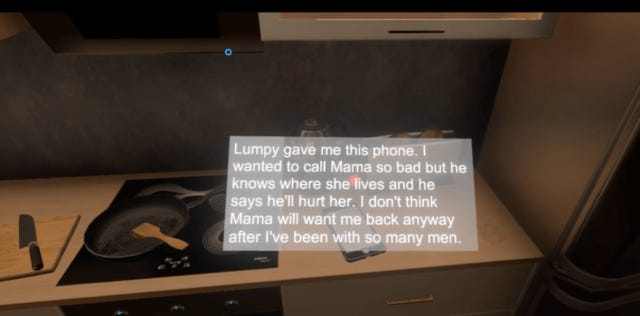
What We Think Human Trafficking Is
Let’s start with what we think trafficking is. For many, the word “human trafficking” conjures images of abductions: young girls taken from their families, thrown into dark vans, and sold into slavery. This is the narrative we see in movies like Taken or in viral posts warning about traffickers lurking in parking lots. And while abductions do happen, they’re far from the most common way trafficking occurs. Most victims aren’t snatched by strangers. They’re groomed, manipulated, and coerced by people they know and often trust.
The Reality of Human Trafficking
That’s one of the biggest gaps in our understanding. Trafficking isn’t always violent. It doesn’t always involve physical restraint or dramatic escapes. Many victims are controlled through psychological manipulation, threats, or financial dependence. A trafficker might be a boyfriend, a family member, or even a supposed employer offering what seems like a legitimate job. This subtlety makes trafficking harder to spot and harder to address.
More Than Just Sex Trafficking
Then there’s the misconception that trafficking is mostly about forced prostitution. While sex trafficking is a significant issue, it’s just one part of the problem. Labor trafficking — where victims are forced to work in agriculture, domestic service, construction, or other industries for little or no pay — is just as prevalent. Yet it’s rarely the focus of public discourse, perhaps because it doesn’t fit the dramatic, rescue-oriented narratives we’re used to.
Who Are the Victims?
Another common misunderstanding is who trafficking affects. Many people imagine the typical victim as a young, attractive woman or a child. While it’s true that women and children are often targeted, trafficking doesn’t discriminate. Men, teenagers, and even older adults can be victims. People from all backgrounds, races, and socioeconomic statuses are vulnerable, though traffickers often prey on those who are already marginalized or struggling: immigrants, the homeless, or those in financial hardship.
Where Trafficking Happens
And where does trafficking happen? If you asked me a few years ago, I would have said it’s mostly a problem in developing countries. After all, the news often highlights trafficking cases abroad: children in sweatshops, women in brothels, refugees exploited on their journeys. But trafficking isn’t just an “over there” problem. It’s happening in big cities, small towns, and suburban neighborhoods across the United States. It’s in nail salons, restaurants, farms, and homes. It’s facilitated through social media, job advertisements, and even personal relationships. Trafficking isn’t just far away; it’s right here, hiding in plain sight.
How Misconceptions Are Perpetuated
So, if we’re so misinformed, where did these misconceptions come from? A big part of the problem is how trafficking is portrayed in the media. News outlets and movies often focus on the most shocking and dramatic cases, not the more subtle and common forms of trafficking. Social media, too, plays a role. Viral posts warning about traffickers marking cars with zip ties or targeting women in parking lots spread like wildfire, despite being largely unfounded. These stories create fear and panic but do little to educate or inform.
When Trafficking Is Used to Push Agendas
But it’s not just about misinformation. Sometimes, the term “human trafficking” is deliberately misused to serve specific agendas. Politicians might invoke trafficking to justify stricter immigration policies, framing undocumented migrants as either victims needing rescue or criminals enabling trafficking networks. Advocacy groups might highlight trafficking to draw attention to their causes, sometimes oversimplifying or exaggerating the issue to rally support. Even companies have used the trafficking narrative to push for policies or regulations that align with their interests. The result is a public discourse that’s often more about fear and control than about understanding and solutions.
How We React to Trafficking Stories
How do we, the average Americans, react to all this? When we hear about trafficking in the news, our first reaction is usually emotional: fear for ourselves or our loved ones, anger at the perpetrators, and pity for the victims. These emotions are natural, but they’re not always productive. Fear makes us more likely to believe and share sensationalized stories, spreading misinformation. Anger might lead us to support simplistic solutions, like tougher laws or more policing, without addressing the root causes of trafficking. And pity can sometimes dehumanize victims, reducing them to passive figures in need of rescue rather than individuals with agency and resilience.
The Path Forward
At the same time, the complexity of trafficking can make us feel helpless. The issue seems so big, so hidden, and so entrenched that we don’t know where to start. This helplessness often leads to apathy. If we can’t solve the problem, why bother trying? And so, we disengage, leaving the issue to others to handle.
Understanding and Taking Action
So, where do we go from here? The first step is education. We need to move beyond the headlines and Hollywood portrayals to understand what trafficking really is. It’s about coercion, not just kidnapping. It’s about labor as well as sex. It’s about systemic vulnerabilities like poverty, lack of education, and weak legal protections. And it’s happening everywhere, not just in distant lands.
We also need to challenge the myths and misinformation that cloud our understanding. When we see a viral post about trafficking, we should pause and fact-check before sharing. When we hear politicians invoking trafficking, we should question their motives and look for evidence. And when we encounter sensationalized news stories, we should remember that trafficking is rarely as simple or dramatic as it’s made to seem.
Solutions Needed. Now.
Most importantly, we need to focus on solutions. This means supporting policies that address the root causes of trafficking, like poverty reduction, education access, and worker protections. It means advocating for survivor-centered approaches that prioritize their needs and agency. And it means getting involved in our own communities, whether by learning to recognize the signs of trafficking, supporting local organizations, or simply having conversations to raise awareness.
Human trafficking is a complex, pervasive issue. But our understanding of it doesn’t have to be shaped by fear, misinformation, or manipulation. By educating ourselves and others, we can move beyond the myths and work toward real solutions. Because trafficking isn’t just a problem for others to solve; it’s a challenge we all have a role in addressing.
About Radical Empathy Education Foundation
We prevent abuse through interactive education, including VR. We built what we wish had existed for us and our children. Our flagship program, TRAPPED: A VR Detective Story, has trained over 20,000 people across America. It teaches 60 Key Lessons sourced from the 14 leading organizations in the field — force-ranked by consensus, mapped to interactive dialogue, and deliverable in a single class period.
Nobody understands until they put on the headset. The immersion and privacy change everything. That’s why 98.6% of respondents at the 2018 TASC conference wanted it in their schools — and why we don’t send brochures. We send headsets.
Jacqueline Cain, Co-Founder jacqueline@reefcares.org · 512.545.0525
Billy Joe Cain, Co-Founder billy@reefcares.org · 512.521.8874
reefcares.org · Schedule a demo
☕ Buy us a coffee · 💛 Donate via PayPal
501(c)(3) · EIN 82-0704070 · Verify on GuideStar · All donations are tax-deductible.
TRAPPED: A VR Detective Story is developed by differentOctober LLC and licensed to Radical Empathy Education Foundation.
© differentOctober LLC. Used by reefcares.org with permission.
Subscribe free — every subscriber helps more people find us.

Learn more about Radical Empathy Education Foundation and connect to access their VR training at ArborXR’s XR Directory.
 | A guest post by
|